Top 10 Data Center Locations USA for 2026
Explore the top 10 data center locations USA in 2026. Our guide covers key markets like Northern Virginia and Dallas with capacity stats and market analysis.
19 min read

The United States is the world's largest data center market by facility count, with independent estimates putting the country at about 5,426 to 5,427 data centers in early 2025, far ahead of Germany's roughly 529. That scale still doesn't tell the whole story, because the true advantage in data center locations USA is concentration. Virginia alone is listed at about 637 facilities, Texas around 480, and California about 291, which shows how a few states carry a disproportionate share of national digital infrastructure (Statista).
The market is also shifting fast. Pew reported in April 2026 that the U.S. already had more than 3,000 operational data centers and more than 1,500 additional sites in development, with most new projects moving into rural areas (Pew Research Center). That matters for site selection because the old model, a few coastal hubs doing almost all the work, is giving way to a broader search for land, power, fiber, and community acceptance. In 2024, U.S. facilities consumed 183 TWh of electricity, equal to over 4% of total U.S. electricity consumption, which makes grid capacity and utility timing central to every serious location decision (Pew Research Center).
The strongest U.S. markets share one trait, they convert power into deployable capacity at scale. Northern Virginia, Dallas-Fort Worth, Chicago, Phoenix, Atlanta, Silicon Valley, Portland-Hillsboro, Salt Lake City, Reno, and Miami each solve a different mix of latency, interconnection, cost, and resilience requirements. The comparisons below use a standardized lens, capacity, major operators, and growth signals, so the tradeoffs are easier to compare side by side. Readers can also use the Data Centers List directory to inspect facilities, operators, and mapped locations interactively.
Table of Contents
- 1. Northern Virginia Loudoun County Data Center Alley
- 2. Dallas-Fort Worth Metropolitan Area Central Hub
- 3. Silicon Valley and Bay Area Technology Innovation Hub
- 5. Chicago and Midwest Hub Central North American Gateway
- 5. Chicago and Midwest Hub Central North American Gateway
- 6. Atlanta and Southeast Region Emerging Growth Corridor
- 8. Salt Lake City Utah The Intermountain Hub
- 8. Salt Lake City Utah The Intermountain Hub
- 9. Reno Nevada The Eastern California Alternative
- 10. Miami and South Florida Latin America Gateway
- Top 10 U.S. Data Center Comparison
- Choosing Your Next Data Center Location Strategically
1. Northern Virginia Loudoun County Data Center Alley
Northern Virginia still sets the pace for data center locations USA because it combines dense fiber, peering access, and power-scale campus development in one corridor. One industry source places Northern Virginia at 3,945 MW of multi-tenant commissioned power across 300 data centers, and the top 10 U.S. markets together at 10,715 MW across 1,230 facilities, which shows just how heavily capacity is concentrated in a few metros. That concentration makes Loudoun County less of a “market” and more of an infrastructure basin where power access, transmission timing, and land availability dominate every decision.
Why buyers keep coming back
The practical draw is not just scale. It's the ability to sit near major cloud and colocation ecosystems, from AWS us-east-1 to Microsoft Azure and Google Cloud, while staying close to East Coast traffic patterns and interconnection points. The region's density also means that procurement teams can compare carriers, cross-connect options, and campus layouts without leaving the same submarket.
A facility like Equinix DC1 in Ashburn illustrates why the county is still the benchmark. Enterprises often use Northern Virginia for production workloads that need low-latency access to the Northeast, public-sector adjacency, and broad carrier choice, but the same strengths create bottlenecks when power blocks are scarce.
Practical rule: in Northern Virginia, the right building can matter less than the right utility timeline. If the power date slips, the site does too.
The downside is simple, premium demand pushes premium pricing, and the market rewards buyers who negotiate early. Teams also need to plan for water-stress screening, multiple carriers for redundancy, and substation proximity before they get attached to a specific campus. For many buyers, this market works best when it anchors a multi-region strategy instead of carrying the full production stack alone.
2. Dallas-Fort Worth Metropolitan Area Central Hub
Dallas-Fort Worth has become a central U.S. option because it balances scale, connectivity, and operating flexibility better than many legacy markets. The region sits inside a broader U.S. market where the top 10 metros already account for a large share of commissioned power, and DFW benefits from that same interconnection logic, especially for workloads that need reach into both coasts without the cost pressure of Northern Virginia or Silicon Valley. It's not the cheapest market in the country, but it often gives operators a cleaner path to scale.
Capacity, carriers, and buildability
The attraction is a familiar one for infrastructure teams, a large labor pool, broad airline access, and good carrier diversity. DFW also makes sense for hyperscale and enterprise buyers that want a central node for disaster recovery, cloud adjacency, and content delivery. The market's value is that it supports both large campuses and smaller interconnection footprints without forcing a single network design.
The CenterSquare Dallas DFW1 facility in Fort Worth is a useful example of how the metro supports both footprint and flexibility. Real-world deployments from cloud, AI, and colocation operators have made the region feel less like an alternative and more like a default second choice for national architectures, especially when teams want geographic redundancy with East Coast sites.
Operators that need national resilience often pair DFW with Northern Virginia rather than treating the two as substitutes.
Cooling strategy matters here more than in cooler climates. Summer conditions push teams to pay close attention to mechanical design, and power contracts need careful structuring because load growth can change quickly across the metro. A key strategic advantage is optionality; DFW gives operators enough land, enough fiber, and enough talent to support multiple build types without locking them into a single pattern.
3. Silicon Valley and Bay Area Technology Innovation Hub
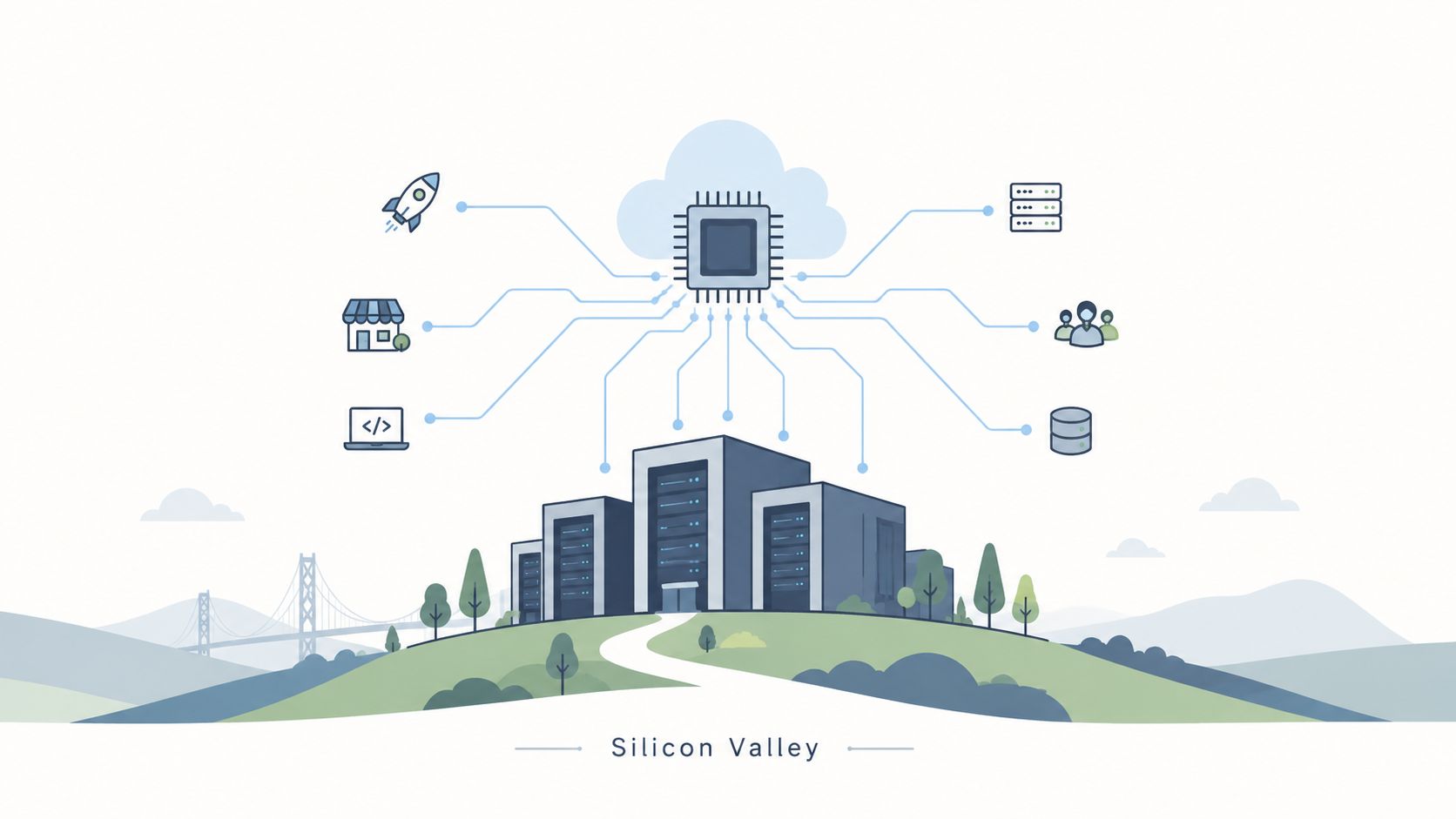
Silicon Valley remains essential because it is still the gravity well for product development, cloud engineering, and internet infrastructure strategy. Even as some capacity shifts to cheaper markets, the Bay Area continues to matter for companies that need close access to technical talent, platform teams, and West Coast traffic. A market can lose relative share and still remain strategically unavoidable.
Why the Bay Area stays in the conversation
The Bay Area's advantage is proximity. Major tech firms, network engineers, and cloud architects are already concentrated there, which makes it easier to align infrastructure with product release cycles and operational teams. Colocation also tends to win here more often than greenfield development, because land is tight, costs are high, and expansion room is limited.
The Equinix SV1 to SV10 campus footprint in San Jose shows how much value still sits inside dense, network-rich campuses. Operators in this market usually optimize for interconnection quality, resilience, and access to the technology ecosystem rather than sheer land scale.
Bay Area buyers also have to treat seismic design as a first-order issue, not a box to tick later. That changes everything from structural engineering to backup planning. Water-efficient cooling matters too, because the market's physical constraints are part of the cost of staying close to the technology core. For many companies, Silicon Valley functions as a control center, while larger capacity lives elsewhere.
5. Chicago and Midwest Hub Central North American Gateway
Chicago remains one of the most important U.S. data center markets because it sits at the center of North American network geography. That position supports dense interconnection, gives operators access to enterprise demand across the Midwest, and places the metro within reach of both coastal traffic patterns and inland distribution routes. The market's value is practical rather than speculative, which is why it continues to appear in planning for enterprise and wholesale deployments.
Interconnection with staying power
Chicago's location reduces routing friction for companies that need broad U.S. reach without relying on either coast as the main anchor. It also benefits from an established carrier and interconnection base, so new capacity can plug into an existing ecosystem instead of requiring that ecosystem to be built from the ground up.
The Digital Realty's Chicago interconnection hub at 350 E Cermak as a central gateway example illustrates how the market functions. Large facilities in the metro support both cloud-adjacent workloads and enterprise colocation, and that mix helps stabilize demand when one segment slows. It also shows why Chicago often serves as a connectivity hub rather than only a location for raw capacity growth.
Chicago also rewards disciplined engineering. Seasonal temperature swings affect both heating and cooling design, while winter resilience matters alongside summer power planning. That pushes operators to treat efficiency, backup systems, and maintenance planning as part of the site strategy, not as afterthoughts. The result is a market that continues to hold its position because it solves a different problem from the fastest-growing Sun Belt hubs, it gives operators a central gateway for interconnection, enterprise access, and regional redundancy.
5. Chicago and Midwest Hub Central North American Gateway
Chicago holds its position because it sits at the center of North American network geography. That location supports coastal traffic, dense interconnection, and a large metro with enterprise demand and a deep technical labor pool. The market's value is steadiness, not hype, which is why it keeps appearing in infrastructure plans across enterprise and wholesale segments.
Interconnection with staying power
Chicago works because it sits in the middle of the map and in the middle of many network routes. That makes it practical for companies that need broad U.S. reach without anchoring everything on either coast. The market also benefits from an established interconnection culture, so operators can build around known carrier ecosystems instead of creating one from scratch.
The Digital Realty Chicago interconnect hub at 350 E Cermak is a clear example of how the market functions. Large-scale facilities in the metro support both cloud-adjacent workloads and enterprise colocation, and that mixed demand keeps the market resilient when one segment slows.
Chicago also rewards disciplined engineering. Seasonal extremes push teams to design for heating and cooling efficiency, while winter resilience matters just as much as summer power planning. That balance helps explain why the market has outlasted multiple infrastructure cycles. It is not the cheapest market, and it is not the flashiest, but it remains one of the most dependable central gateways for national and international connectivity.
6. Atlanta and Southeast Region Emerging Growth Corridor
Atlanta stands out because it combines a broad enterprise base with cost dynamics that remain better than many legacy coastal hubs. The Southeast has also become more attractive as operators look for growth, power availability, and a metro that already supports major cloud and enterprise demand. That shift aligns with the wider move toward new projects outside the most crowded coastal corridors.
A growth corridor with network value
Atlanta serves multiple demand profiles at once. It supports cloud, enterprise, and content workloads, and it gives planners a geographic hedge against concentration in the Northeast. That matters for organizations that want resilience without placing every deployment in the same power-constrained markets.
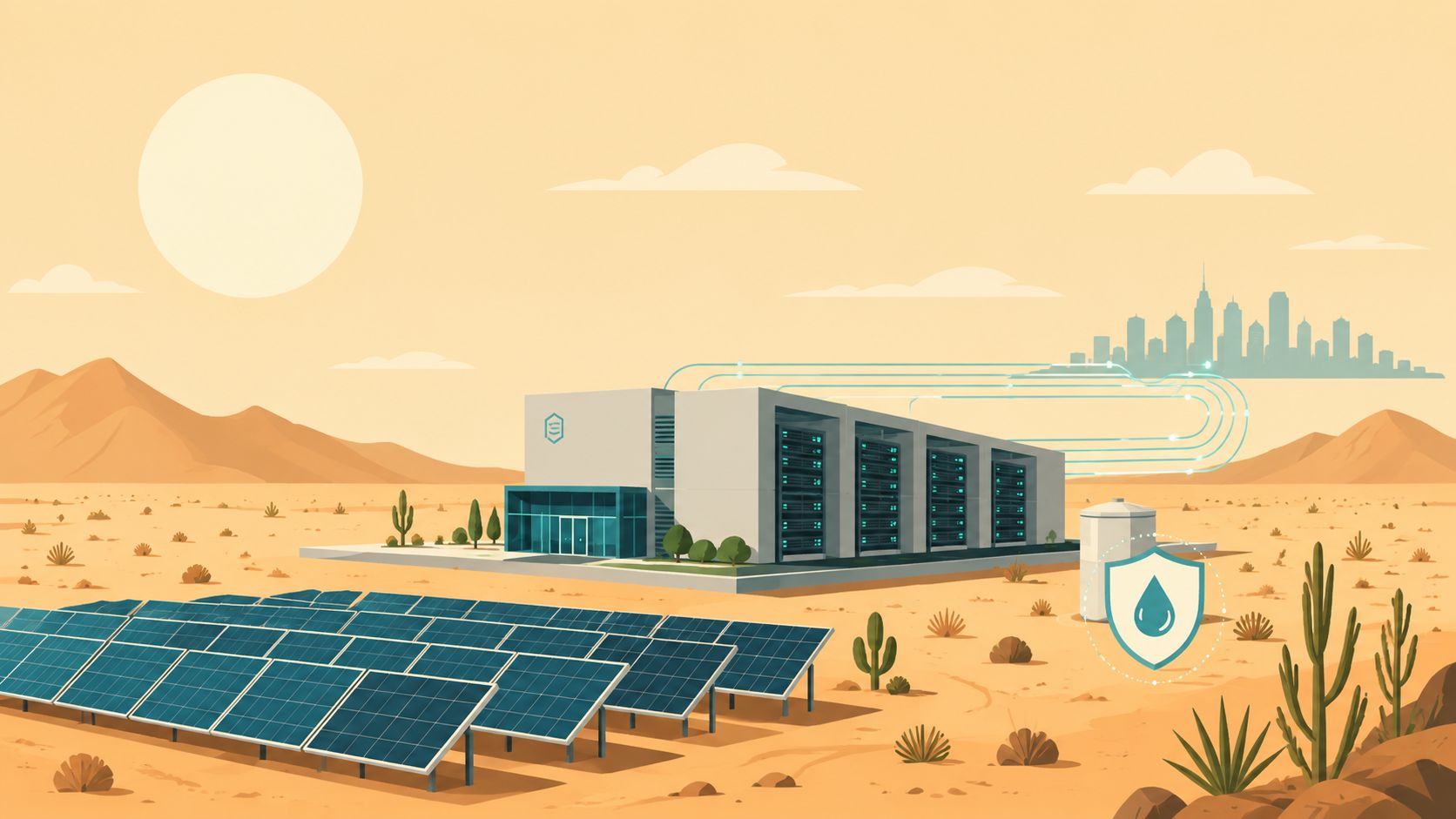
The Southeast has also become a serious expansion area for operators, with major infrastructure players building for current enterprise demand and future AI workloads. That mix supports a healthier market structure because the demand base is not tied to a single buyer type.
The QTS Atlanta footprint illustrates why the metro keeps drawing large deployments. Business infrastructure, regional connectivity, and room for expansion make Atlanta a practical choice for teams that want a growth corridor instead of a mature market with less pricing flexibility. Cooling and utility planning still matter, but the region's broader appeal is clear. It offers scale without the same level of concentration risk seen in the most saturated hubs.
8. Salt Lake City Utah The Intermountain Hub
Salt Lake City stands out as a practical Intermountain market because it combines Western reach with lower operating friction and a useful profile for disaster recovery planning. Its dry climate supports efficient cooling design, and its location gives operators a way to serve both coastal and inland demand without California's cost pressure. That combination fits the broader shift toward markets that can add power and land capacity at the same time.
Why the Intermountain West keeps gaining ground
The market's appeal is straightforward. Operators gain a lower-risk setting for disaster recovery functions, along with enough connectivity to support production workloads that do not need to sit on the coasts. Salt Lake City also benefits from the broader Silicon Slopes ecosystem, which gives the metro a deeper talent base than many newer markets.
Salt Lake City's role is best understood as steady infrastructure capacity rather than headline-driven growth. It supports the kinds of deployments that value utility discipline, regional redundancy, and predictable operating conditions. That makes it useful for planners who want a Western presence without the pricing pressure seen in more saturated coastal hubs.
Water-efficient cooling still matters, especially in arid conditions, and operators have to account for that in facility design. The market's value comes from balance, it offers Western connectivity, room for expansion, and a cost structure that can work for long-term planning. For teams comparing data center locations usa, Salt Lake City is a disciplined option rather than a speculative one.
8. Salt Lake City Utah The Intermountain Hub
Salt Lake City has grown into a practical Western market because it combines central reach, low operating friction, and a useful setting for disaster recovery planning. Its dry climate supports cooling design, and its location lets operators serve both coastal and inland demand without California's cost pressure. That mix aligns with the wider shift toward markets that can add power and land capacity together.
Why the Intermountain West keeps gaining ground
Salt Lake City appeals to operators that need a lower-risk setting for disaster recovery functions and enough connectivity for production workloads that do not need to sit on the coasts. The market also draws strength from the broader Silicon Slopes ecosystem, which gives it a deeper talent base than many newer metros.
It is a steady infrastructure market. Local capacity tends to matter more than headlines, and that is part of its value. Operators looking for predictable utility conditions, western distribution options, and a location that can support layered resilience plans often find Salt Lake City easier to justify than larger, more crowded hubs.
The market also stands out because of the way it fits into a standardized comparison of data center locations usa. On the Data Centers List platform, Salt Lake City can be reviewed alongside other major markets using the same lens, power capacity, operator presence, and growth patterns. That makes it easier for planners to compare where the market is gaining durability rather than just chasing size.
Water-efficient cooling still matters in arid regions, but the larger strategic point is location. Salt Lake City can support western reach, disaster recovery, and mid-continent access without the same pressure found in the largest coastal hubs. For teams building a layered resilience plan, it remains a disciplined choice because it is geographically useful and operationally manageable.
9. Reno Nevada The Eastern California Alternative
Reno has become a compelling option for companies that want Northern California reach without Bay Area costs and constraints. It sits close enough to serve West Coast demand, but far enough away to offer a better development environment for large campuses. That combination has made it a natural landing zone for tech and infrastructure buyers looking for an “east of California” strategy.
Why Reno keeps showing up in planning
Reno's appeal is partly geographic and partly financial. It gives operators access to the broader California market while avoiding some of the region's highest real estate and seismic concerns. The dry climate also helps on the operational side, especially for cooling strategies and long-term campus planning.
The Switch Citadel Campus in Reno helped anchor the city's reputation as a serious data center destination. As a result, Reno is often treated as more than a spillover market, it's a deliberate choice for firms that want western latency without western coastal friction.
The market also benefits from incentive structures and a growing infrastructure story around large campuses and energy planning. That said, fire mitigation and air quality planning matter more here than in some other markets, so design decisions need to reflect the local environment. Reno works best for organizations that are disciplined about power, tax modeling, and regional redundancy.
10. Miami and South Florida Latin America Gateway
Miami stands apart because it serves a different geography than most U.S. hubs. South Florida is the primary North American gateway to Latin America and the Caribbean, and that makes it strategically important for regional content delivery, carrier traffic, and cross-border enterprise deployments. The city's value is not just U.S. reach, it's international adjacency.
A regional gateway with network gravity
Miami works because the market is built around connectivity to the south. Multiple submarine cable landing points, carrier hotels, and regional peering options give operators a practical bridge into Latin America. That makes it especially useful for content platforms, financial services, and enterprise workloads with regional customers.
The Equinix MI1 facility at the NAP of the Americas remains a strong symbol of that role. Miami's carrier ecosystem gives buyers a way to support cross-border traffic with lower friction than many inland markets can offer.
Hurricane resilience is the critical design issue here. Facilities need hardened infrastructure, strong backup planning, and cooling strategies that work in humid conditions. Still, the market keeps attracting attention because the business case is obvious for anyone serving Latin America or the Caribbean. For those workloads, Miami is not a niche location, it's often the cleanest entry point.
Top 10 U.S. Data Center Comparison
| Market | Implementation complexity | Resource requirements | Expected outcomes | Ideal use cases | Key advantages |
|---|---|---|---|---|---|
| Northern Virginia (Loudoun County) - Data Center Alley | High, complex interconnection & power negotiations | Very high power/fiber; premium real estate | Maximum network density; low‑latency East Coast reach | Hyperscale cloud, peering hubs, federal/financial workloads | Unmatched peering density, mature supply chain, high reliability |
| Dallas‑Fort Worth (DFW) - Central Hub | Moderate, expansion‑friendly but cooling considerations | Large land availability; competitive power | Cost‑effective scale with central North American coverage | Hyperscale alternatives; regional redundancy | Lower costs than coastal markets; strong backbone connectivity |
| Silicon Valley & Bay Area - Technology Innovation Hub | High, constrained site availability; strict compliance | High‑cost real estate; extensive fiber and renewables | Proximity to innovation; optimal West Coast/Asia latency | R&D, product teams, latency‑sensitive consumer services | Tech ecosystem access, mature peering, VC/engineering talent |
| Phoenix, Arizona - High‑Growth Emerging Market | Moderate, requires advanced cooling and water planning | Ample land; growing solar and power capacity | Rapid capacity growth with competitive operating costs | AI/GPU farms, large‑scale hyperscale builds | Very competitive costs, large expansion room, solar potential |
| Chicago & Midwest Hub - Central North American Gateway | Moderate, established operations with seasonal design needs | Diverse utilities; strong peering and backbone links | Central routing hub; balanced costs and interconnection | Interconnection, CDN, disaster recovery and distribution | Central North America reach; mature exchange ecosystem |
| Atlanta & Southeast Region - Emerging Growth Corridor | Moderate, expanding market with peering development | Abundant land; competitive utilities | Growing capacity and Southeast/LATAM connectivity | Regional cloud presence, LATAM transit, cost‑sensitive workloads | Lower costs, strategic bridge to Latin America, expanding talent |
| Hillsboro, Oregon - Silicon Forest | Low–Moderate, leverage incentives and free‑cooling | Low power rates; proximity to trans‑Pacific cables | Energy‑efficient West Coast presence; Asia connectivity | Asia‑facing workloads, cost‑efficient West Coast deployments | Tax incentives, free cooling, trans‑Pacific connectivity |
| Salt Lake City, Utah - The Intermountain Hub | Low, simple permitting, low disaster risk | Affordable power/land; efficient dry‑climate cooling | Secure disaster‑recovery sites; efficient operations | DR, backups, enterprise secondary sites | Very low natural‑disaster risk; strong cost efficiency |
| Reno, Nevada - The Eastern California Alternative | Moderate, tax‑driven builds; dependency on CA links | Aggressive tax abatements; low land and power costs | Cost‑effective Bay Area alternative with good latency | Bay Area DR/migration; hyperscale campuses | Significant incentives, lower seismic risk, proximity to Silicon Valley |
| Miami & South Florida - Latin America Gateway | High, requires hurricane‑resistant design & compliance | Submarine cable access; constrained coastal land | Direct LATAM reach; regional content delivery | LATAM gateway, CDN, bilingual services and regional hubs | Direct submarine links, strategic geographic gateway, bilingual workforce |
Choosing Your Next Data Center Location Strategically
The best data center locations USA offers depend on what the workload needs. Northern Virginia is still the clearest choice for East Coast latency and dense interconnection. Dallas-Fort Worth gives operators a central hub with strong network reach, while Silicon Valley keeps its role as the technology center of gravity even when expansion shifts elsewhere. Phoenix, Atlanta, Hillsboro, Salt Lake City, Reno, and Miami each solve a different problem, whether that problem is power availability, western reach, disaster recovery, or international connectivity.
Capacity matters, but capacity alone doesn't decide the market anymore. As noted earlier, the U.S. has 54,100 MW of operating capacity and 367,348 MW planned across 1,649 planned projects versus 1,162 operating sites, which means the pipeline can change the map much faster than older facility counts suggest. That's why site selection teams now need to think about interconnection queues, utility upgrade risk, land, fiber, cooling, and local community response together.
The strongest strategic decisions usually start with a workload profile. A latency-sensitive financial platform may still need Northern Virginia or Chicago. A hyperscale AI build may fit better in Phoenix, Dallas, or an emerging inland corridor. A cross-border content network may get more value from Miami than from a larger inland market. The wrong answer is to pick a city because it's familiar; the right answer is to match the location to the power, network, and resilience profile the workload requires.
Data center geography is moving quickly, and the new winners will be the teams that compare markets with discipline instead of relying on reputation alone. Use this list as a short list starter, then confirm facility-level details, operator presence, and pipeline visibility in a live directory before committing capital.
If a new site search, expansion plan, or market comparison is underway, use Data Centers List to inspect facility profiles, operator footprints, power capacity views, and mapped locations in one place. The directory makes it easier to compare U.S. markets side by side and track the pipeline behind them.